Skip to content

Seen in Colonial Times Magazine

February 10, 2012

We’re in the local glossies!

Colonial Times magazine recently paid Feinmann Design|Build the nicest compliment by publishing a photo of Peter and Tammy receiving multiple awards at the Greater Boston Builders Association’s PRISM (Prestigious Results in Sales and Marketing) event.


Colonial Times Magazine article

Colonial times magazine article on our PRISM Awards


Dancers Design in Lexington, MA

January 21, 2012
by admin

After what felt like a lifetime of dreaming of a different layout for their home, a Lexington couple finally decided to take the plunge with Feinmann Design|Build – calling the phone number off the brochure they had saved for several years.

Long time partners in life and on the dance floor, they sought a home in which they could practice their craft. They asked our team to create a plan that would transform the main living area from a compartmentalized space to an open floor plan. Visions of pushing the furniture aside, turning up the music and working on their choreography in their own little ballroom fueled the final design.

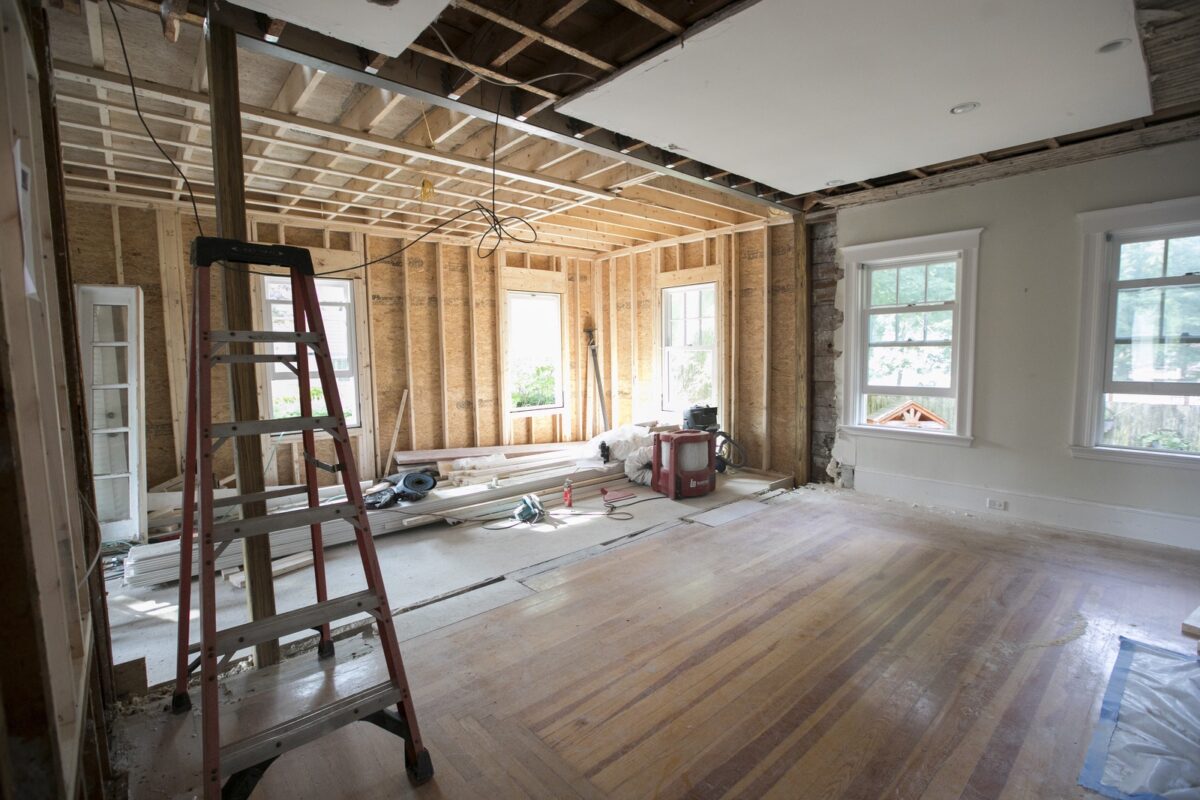
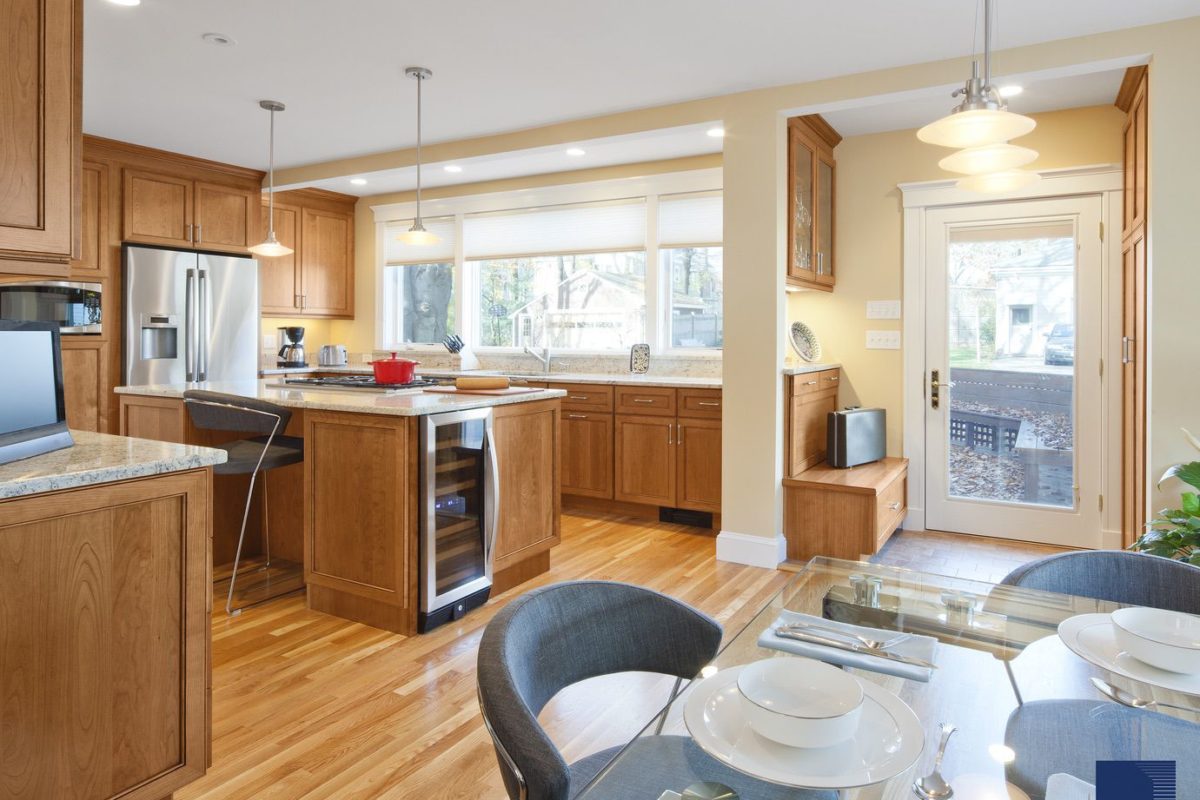
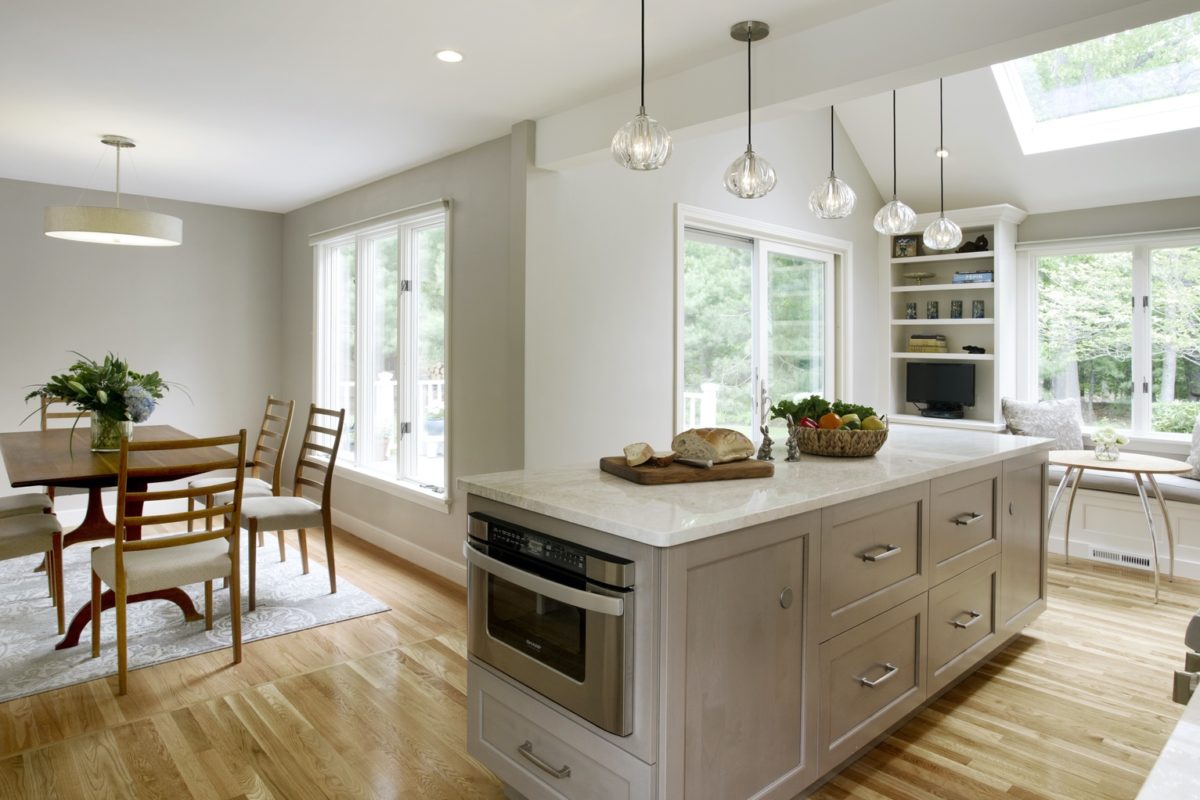
Working with our client’s request for a contemporary and open space, the plan required removing the walls dividing the living and dining area from the existing kitchen. The kitchen was then relocated to the back of the home, closest to the dining area – overlooking the new deck built to wrap around a cherished hemlock tree.  Open and bright, the kitchen ‘s vaulted ceiling and skylights offer glimpses of the many tall trees lining their back yard. Modern elements like stainless steel appliances, sleek door pulls and ‘green’ cabinetry connect the kitchen to the rest of the updated open floor plan. The living area is now closer to the front of the home, where the kitchen was previously located.  An open floor plan and added length guarantees that dance routines are no longer interrupted.

We wish our clients’ many years of blissful dancing and music in their new home!


The Energy-Efficiency Pyramid

January 13, 2012

Our obsession with Residential Energy Efficiency led us to this article on GreenBuildingAdvisors.com by Martin Holladay.


Modeled on the ‘food pyramid,’ the conservation pyramid is a guide for energy retrofit work

Start at the bottom rung. The energy-saving measures at the bottom of the pyramid are much more cost-effective than those at the top. In fact, the top two measures on the energy conservation pyramid are almost never cost-effective. (Click on the picture to enlarge it.)

We’re all familiar with the food pyramid — the triangle with grains and cereals at the bottom and fats and sugars at the top. Inspired by the food pyramid, a Midwestern electric utility, Minnesota Power, has created a useful graphic called the energy conservation pyramid. (According to a Minnesota Power spokesperson, the originator of the conservation pyramid was Bob McLean, the chief operating officer at Hunt Utilities Group.)

The energy conservation pyramid includes ten levels. Like the food pyramid, it’s read from the bottom up. Homeowners who are uncertain of the best way to lower their energy bills should start at the lowest level of the pyramid and work their way up. In general, one shouldn’t proceed to a higher level until the actions below that level have been completed.

Actions near the bottom of the pyramid are much more cost-effective than actions near the top of the pyramid. At current energy prices, in fact, the actions listed on the top two layers are never cost-effective.

The rules displayed in the energy conservation pyramid are not set in stone; every house is different, and different climates dictate different strategies. But it’s hard to quibble with the pyramid’s basic hierarchy.

From the bottom up, here are the pyramid’s ten steps.

1. Home energy audit
Before beginning any energy retrofit work, a homeowner needs information — information best obtained through a home energy audit.

A good home energy audit always includes a blower-door test; most audits also include athermographic inspection. To be sure your auditor is well trained, choose one certified byRESNETBPI, or CBPCA.

A home energy audit can cost as much as $600. Thanks to subsidies from utilities and local governments, however, the cost of a home energy audit is often much less. Yet even if you pay the full cost of an energy audit, the money will be well spent.

Why spend hundreds of dollars on an energy audit? I can think of several reasons:

  • When considering energy retrofit work, most homeowners prioritize the wrong steps. An energy audit provides valuable information to counterbalance misleading advertising pitches for worthless products.
  • Your audit is likely to reveal unseen defects in your home — for example, thermal bypasses (air leaks) through convoluted, hidden chases, or insulation gaps revealed by an infrared camera.
  • At the end of your audit, you’ll receive a customized list of the most important energy retrofit steps for your house — a list that may differ from your assumptions (or even from the recommendations of the energy conservation pyramid).
  • By identifying the most important retrofit tasks for your specific house, a good audit can save you hundreds of dollars that might have been wasted on inappropriate work.


2. Low-cost measures to reduce plug loads
The next step, though obvious, is often neglected: turn things off.

Inattention and laziness are responsible for a significant amount of energy waste; this step off can yield significant savings for a very small investment. To lower your electric bill:

  • Turn off the lights when you leave a room.
  • Turn off appliances that aren’t being used.
  • When not in use, unplug chargers for cell phones and similar battery-operated gadgets.
  • Put televisions and other “instant on” appliances on a plug strip — and remember to turn off the plug strip when the appliance isn’t in use.


3. Lighting
The next step is very cost-effective: make sure your house is incandescent-free. Since most LED lamps are still less efficient than CFLs — and far more expensive — CFLs are still the best lamp for most fixtures.

For kitchens and basements, consider installing fixtures that use efficient linear fluorescent tubes (T5 or T8 tubes).

4. Air sealing
Air-sealing work is best done by an experienced home-performance contractor equipped with a blower door. Although this step usually costs hundreds of dollars, it will usually yield a quick payback in energy savings.

Air sealing work is not the same as caulking. Many homeowners have spent hours wandering around their house with a caulk gun — on the interior, filling cracks between window trim and plaster, or on the exterior, filling cracks between clapboards. Most of this caulking is a total waste of time. In fact, by trapping water, most exterior caulking does more harm than good.

Blower-door directed air sealing work is usually concentrated in a home’s basement (especially at the rim-joist area) and attic (where huge thermal bypasses are often hidden under a layer of fiberglass batts). Most air leaks are best addressed with two-component spray polyurethane foam.

5. Efficient appliances
Once you’ve paid for blower-door-directed air sealing, it’s time to take a close look at yourappliances. If some of your major appliances —your refrigerator, clothes washer, or dishwasher — are more than ten years old, you may want to replace them with more efficient models.

Don’t be tempted to buy a bigger refrigerator; small is good. Pay close attention to the yellow EnergyGuide labels — especially the annual kWh number — when you go appliance shopping.

6. Insulation improvements
Ideally, your home has plenty of insulation in the attic, above-grade walls, and basement walls. But if you’re insulation isn’t up to snuff, it’s well worth improving it.

In colder climates, it makes sense to install R-60 insulation in your attic — as long as the attic is accessible and roomy enough to accommodate the insulation depth.

If your stud bays are empty, they can be filled with dense-packed cellulose insulation installed through holes drilled from the exterior.

Basement walls can be insulated on the interior with rigid foam insulation or closed-cell spray polyurethane foam.

7. Water heating
If the configuration of your home’s plumbing pipes permits, you should install a drainwater heat-recovery device — especially if members of your family prefer showers to baths.

If you have an old, inefficient water heater, you may wish to replace it. Options include:

    • A high-efficiency gas-fired water heater;
    • A high-efficiency electric resistance water heater;
    • A heat-pump water heater;
    • An instantaneous gas-fired water heater;
    • An indirect water heater connected to a boiler;
    • Any of the above, supplemented by a solar water heater.

Of all of the options listed in this section, the fastest payback will probably come from the drainwater heat-recovery device. Although a new water heater can lower your energy bills, you shouldn’t expect a fast payback on the investment.

8. Space heating and cooling equipment
When inefficient heating or cooling equipment gets old enough to replace, be sure to invest in the most efficient available equipment. If you’re shopping for a new furnace, look for a high AFUE (in the 90s). If you are shopping for a new air conditioner, look for high SEER (14 or higher).

There’s an important reason why energy-efficiency experts recommend holding back on the purchase of new heating and cooling equipment until air sealing and insulation work is complete: envelope improvements may permit heating and cooling equipment to be downsized. If you replace your heating and cooling equipment before finishing necessary air-sealing work or insulation upgrades, you’ll waste money on oversized equipment.

9. Replacement windows
We’ve now reached the top of the pyramid. Further measures will probably reduce your home’s energy consumption, but they are unlikely to be cost-effective. The reason these measures are at the top of the pyramid is that few homeowners want to spend more on retrofit work than they will ever see in savings.

In a heating climate, the installation of low-e storm windows is more cost-effective than installing new replacement windows.

If, for reasons unrelated to saving money, you insist on new windows, be sure to choose windows with low-e glazing. Glazing with a low U-factor is desirable in all climates. In climates with cold winters, south-facing windows should have a high solar heat-gain coefficient (SHGC); in climates where air-conditioning bills are high, windows should have a low SHGC.

10. Renewable energy equipment
At the top of the pyramid is the category of work least likely to provide a payback: the installation of a photovoltaic system or a wind turbine. There are many reasons you may want to have PV panels or a wind turbine, but saving money isn’t one of them.

Remember, it makes no sense to invest in an expensive PV system until after you have invested in all of the other measures listed on the pyramid.

No silver bullet
One of the Minnesota Power representatives who makes regular use of the conservation pyramid is Dean Talbott, a program manager for the utility.

“I handle a lot of customer calls, and lately I’ve seen a growing interest in renewable energy,” Talbott told me. “A lot of callers are looking for the silver bullet. I just got a call this week from a residential customer who’s spending $200 a month on electricity, and he told me he wants to install solar and wind. I told him he’d be better off to start with efficiency upgrades first.”

‘Twas the Night Before Christmas – Remodeling Style

December 21, 2011
by admin
‘Twas two months before Christmas, when all through the house
Mrs Claus was all cranky so she complained to her spouse (Santa that is).
Though the stockings were hung and the elves were at work,
Mrs Claus thought St Nicholas was kinda a jerk.We all know that Santa runs a really tight ship,
Since he has to prepare for his long one night trip.
To pull off this monsterous task once a year, we all know the crew needs more than a great mood
They depend on the Mrs to come up with the food!So one day from the kitchen arose such a clatter,
The elves and ole Santa ran in to see what in heck was the matter.
While trying to cook in her mangy old kitchen,
Mrs Claus was a yellin – some might call it bitchin’.The counters were all sticky and laminate peeling,
The oven door falling off sent Mrs Claus to a reeling.
The cabinets all broken and sink faucet a dripping,
Mrs Clause in a tirade she started to ripping.

“Get out of my way” she proclaimed as she demolished the space,
“These things that are here must all be replaced.”
Finally Santa did get it he got his wives point,

He exclaimed to his reindeer “Let’s get out of this joint”.
He pulled on his coat and hat and his gloves,
To find a remodeler to build for his Love.
The kitchen she dreamed of and wanted the most,
The one that would make her the North Poles best host.
He called to his reindeer by name to each one “Now Dasher! now, Dancer! now, Prancer and Vixen!
On, Comet! On, Cupid! on, on Donner and Blitzen!
Let’s get to the office of Feinmann right quick
A brand new remodel will sure do the trick!
I will never forget the sounds on the roof,
The prancing and pawing of each little hoof.
As I looked up from my desk and was turning around,
Down the chimney St Nicholas came with a bound.We all know the story about the man dressed in fur from his head to his foot,
And his clothes were all tarnished with ashes and soot.
But when he opened the bag that was flung on his back,
You can bet the surprise to see a full set of plans rolled up in that pack.
He described the dream kitchen right down to a tee,
And asked us to build it for the Mrs and he.
He said it is perfect and that he did know,
He was sure she would love it just like she loved snow.
Plans double checked and permits all pulled
Cabinets and fixtures all delivered in full
The project began we went straight to our work
We all kept our focus not a one he did sherk.
Now our job is complete and punch list all done,
The elves and the Big Man are due for some fun.
Mrs Claus will be cooking all her pies and her cakes
NOW, she will happily do whatever it takes!
Now Mrs Claus never leaves her new Feinmann kitchen,
We know we succeeded with the Great North Pole mission.
So if in the future you worry about Santa’s round belly,
Rest assured it will continue to shake like a bowlful of jelly
As we packed up our trucks, to our team we did whistle,
And away we all flew like a nuclear missile.
But we heard HER exclaim, ‘ere we left for the day,
”Happy Christmas to all, and put your dishes away!”

Written By, Tammy Russo, Senior Production Manager and ‘Project Manager of the Year – 2011′ PRISM Award Winner 

Ice Dam Causes & Prevention

December 14, 2011
by admin


Around this time of year we typically hear from homeowners asking for advice on how to prevent ice dams on their roofs. Sure, we haven’t seen any much snow or ice yet, but we all know it’s coming. Here are some helpful tips from our team at Feinmann to prevent you from having to deal with this costly situation.

What causes ice dams?
Ice dams happen when the outside temperature is below freezing, the roof deck temperature is above freezing, and there is snow on the roof. The warm roof deck causes the snow on top of the roof deck to melt, and the melt water runs down to the edge of the roof where the water freezes leading to a buildup of ice and a backup of water, hence the term “dam”.
How can I prevent an ice dam?
To prevent an ice dam, don’t heat the roof, keep it cold. That way, the snow on the roof eventually dissipates without making large amounts of melt water. The underside of the roof deck should not exceed 30 F. The best way to maintain low temperatures is by ensuring that there is adequate insulation and sealing gaps that let warm air pass into the attic from the house. Some contractors are under the impression that attic ventilation is one of the first steps to help prevent ice dams, but one should always start with sealing the attic and increasing the insulation.

Read here for more information on preventing ice dams:http://ow.ly/3ZrDM or call or email us at Feinmann to come and look at your roof . (781) 860-9800


Info@feinmann.com


Belmont, MA Kitchen ‘After’ photos

December 7, 2011
by admin
Back in August we chronicled a Belmont, MA kitchen addition ‘in progress’  where a great change was taking place…by adding only three feet and six inches. Our photographer recently took these beautiful shots of the completed project and we couldn’t wait to share.

Kitchen after renovation...space management at it's finest

Light from the new windows above the counter open the small space

Our finish carpenter built this beautiful treatment around their fireplace as well

Getting to Know Peter Feinmann

November 9, 2011
by admin

This week we thought we’d get to know the captain of our ship by asking him some questions that have been on our minds…

     1.    What inspires you in talking with clients about a design|build project?

 The best part of my job is speaking with clients and identifying the key element that is driving them towards a renovation project.  Everyone wants a new kitchen, but what most people really want is a kitchen so they can gather with their friends and families. The kitchen is where this happens. Once we understand what is important to our clients, we continue to reinforce that with every stage of our process.

      2.    What’s been the most challenging project of your career?

 The most challenging project of my career were the tough projects..those projects where we did not well serve our clients.  Fortunately, it has been many years since we have had that type of project and I attribute that to that we learned from our past mistakes (and our smaller everyday present mistakes as well!).

 3.    Tell us  something that most people don’t know about you.

That I was a philosophy major in college and that I meditate every morning.

    4.    Whom do you most admire?

Abraham Lincoln.  My favorite place to visit is to the Lincoln Memorial and read his Gettysburg address.  I have always been touched by the humbleness expressed in this speech.

5.    What’s your favorite place to eat in Lexington?

Love to get lunch at Via Lago.


Peter Feinmann with Tammy Russo after she accepted 'Project Manager of The Year' at the PRISM Awards in October


Peter Feinmann, President of Feinmann Inc., started his firm in 1987 from his home.   Recognized as the remodeling industry’s “Contractor Of The Year” almost consistently every year, Peter has been a regular speaker for NARI, JLC, Build Boston and at the Remodelers’ Show. 

 Mr. Feinmann received a Certificate in Carpentry from the North Bennet Street School in Boston where he continues to be involved in their Board of Directors.  In 1991, Peter received his “CR” designation through the National Association of the Remodeling Industry. He has been chosen byRemodeling Magazine as one of the country’s “BIG 50 Remodelers” and is the recipient of an number of industry awards. Feinmann was recognized byProfessional Remodeler Magazine as one of the 101 Best Companies To Work For and was recognized as the 2008 Remodelor of the Year by the Builder’s Association of Greater Boston.  Peter was also noted as the Distinguished Alumni by the North Bennet Street School in 2008.

 Specializing in the design and construction of high – quality residential kitchens, baths, additions and whole house and exterior renovations, Mr. Feinmann is a leader among a new generation of design/build contracting firms that revolutionized the industry for both contractors and consumers alike.  Thoughtful management practices, honest communication, a team approach to every project and Peter’s emphasis on client satisfaction is why Feinmann continues to be one of the most highly-regarded design/build firms in the industry today.

Feinmann’s projects have been featured in Boston Globe Magazine, Better Homes and Gardens, Fine Home Building, Boston Magazine, Home & Garden, Qualified Remodeler and Bob Villa’s American Home.  His articles have been published in the Boston Business Journal, Journal of Light Construction,  and others. 

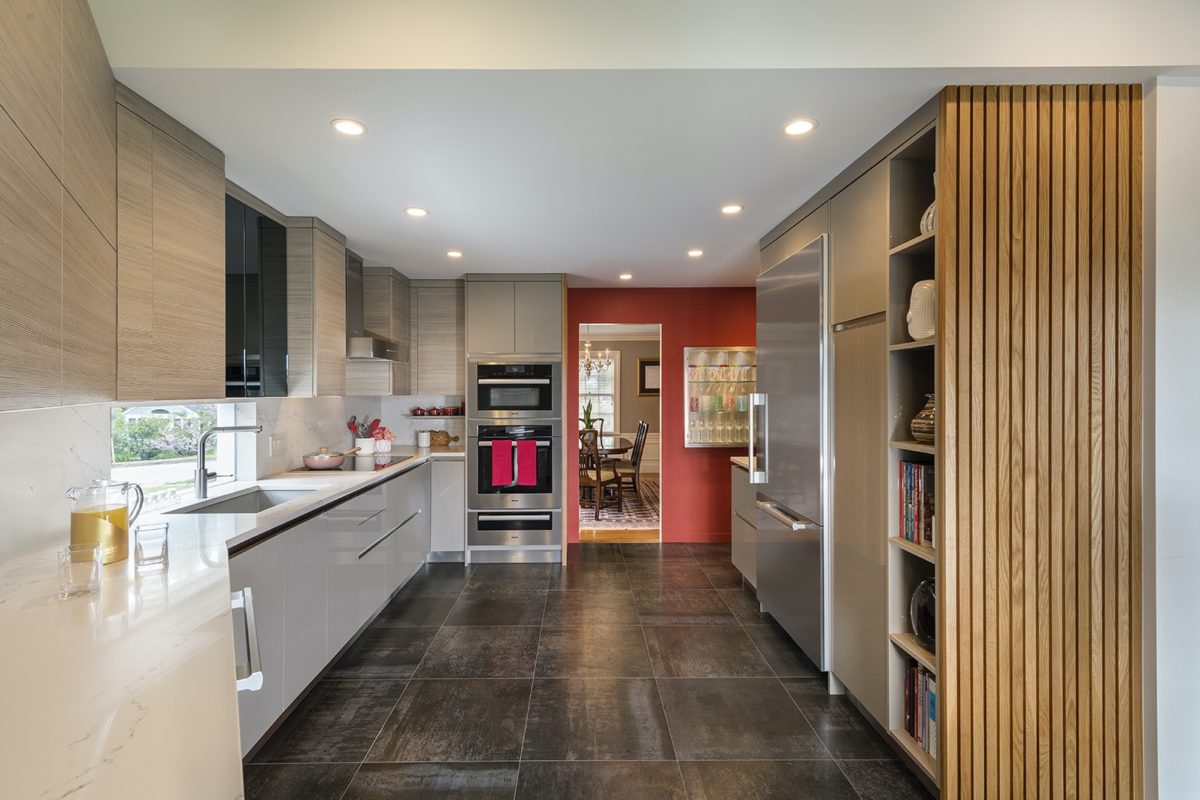
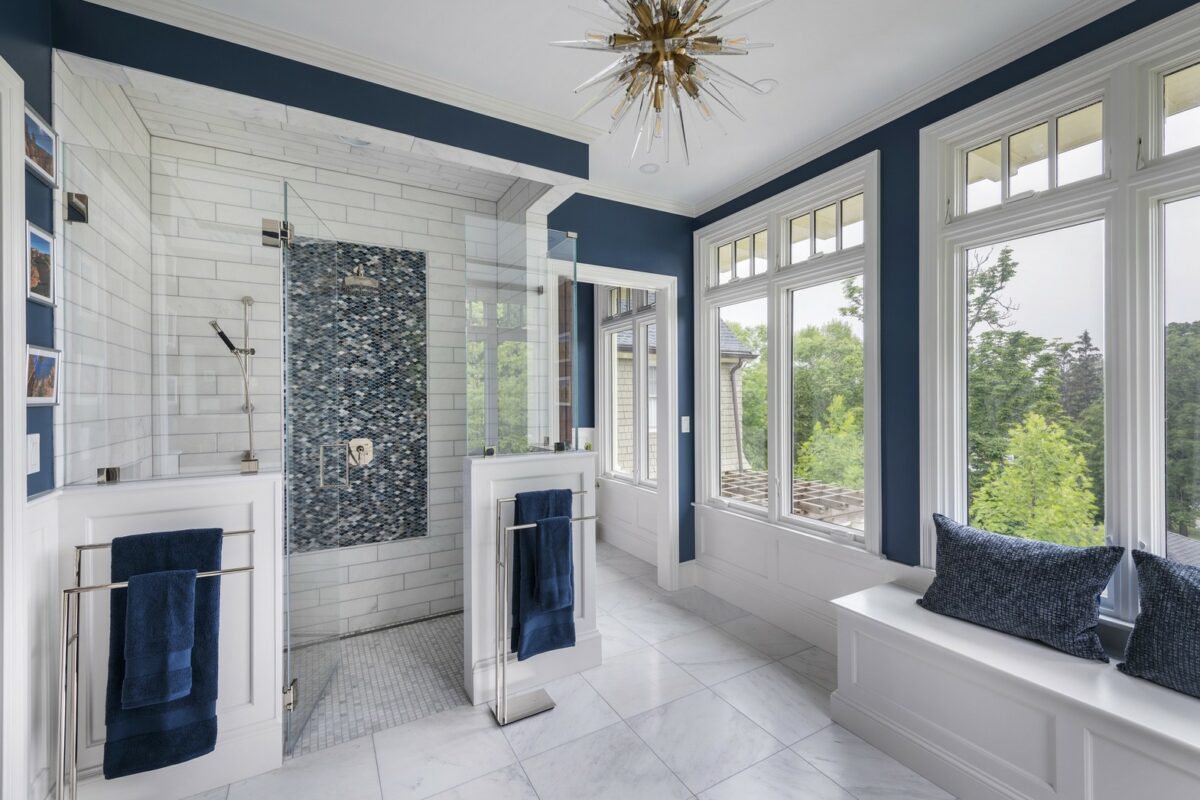
In October 2011, Feinmann Design|Build won three coveted PRISM Awards for Project Manager of the Year  - Tammy Russo, ‘Most Creative Use of Space’, for a bathroom remodel in Arlington, MA and ‘Best Remodeling/Restoration Under $250k’ for a kitchen/family room remodel in Weston, MA. 

When he’s not on a project site, Peter enjoys spending time with his wife and two children skiing, traveling or visiting their summer house on Cape Cod. 


On Tammy – Ode to a Great Project Manager

October 26, 2011
by admin

Some of you have asked to see Tammy Russo’s winning submission to the 2011 Silver PRISM Award for Project Manager of the Year. Our clients say it best, so we’ve selected some of the highlights from their letters that were included in the winning submission:


 ‘ “What in the —- is a plinth?!?” we thought to ourselves as Tammy was explaining a way for improving the look of the interface between a while wall and baseboard molding and a protruding (“proud,” we were to learn) maple cabinet. This perfect suggestion is just one example of how Tammy was able to apply her extensive knowledge, gained over the course of countless projects and life experiences, to help us solve many a design or implementation dilemma. In each case, Tammy was ready with an answer that made sense and was in line with the look and feel we wanted to achieve.

All that said about her knowledge, skills and style, we’re convinced that the key factor in Tammy’s ability to deliver the positive experience we had is that she was able to keep in true harmony with our ongoing situation and feelings – listening – sensing – the wavelengths we were on.  One morning, around the time that the project was nearing completion, we were frantically preparing to entertain in support of our son’s imminent wedding, fretting over how we could put the best face on our almost-finished but still-in-disarray abode – when out of the blue a cleaning crew arrived, along with a breathtaking arrangement of unusual flowers and vegetation, and a selection of delectable desserts.  Almost instantly, we felt relaxed and ready.’

- S.K and A.N.


‘Beyond the scheduling and coordination of the project, Tammy took the time to get to know us, to field our seeming endless list of questions, and to provide us with the benefit of her years of experience when we were unclear of a direction to take.  We truly felt she was invested in the project, and wanted the best for us and for our home.  We, without question, would want Tammy to manage any future projects in our home.

-R.J.


On winning the award…


‘If there were an award for best project manager ever, you would deserve it. In the meantime, congratulations on the project manager of the year award. You are the best and it’s great to see this publicly acknowledged by the industry.’

- D. & M.


Congratulations Tammy!!!

Tammy Russo, Senior Production Manager, has been with Feinmann Design|Build since 1993.

Feinmann Wins 2011 PRISM Awards

October 24, 2011
tags: , ,
by admin

Once again, Feinmann Design|Build won multiple awards at the PRISM Awards on October 19th, 2011. PRISM (Prestigious Results in Sales and Marketing) Awards pay tribute to housing industry professionals for excellence in building, design, sales and marketing. Winning a coverted PRISM Award is a sign of excellence in your field and recognition of superior achievement. Without further adieu, here are the winning projects:

‘Most Creative Use of Space’  - Silver PRISM Award, 2011

Winning bathroom - Arlington, MA


‘Best Remodeling/Restoration Under $250k’ – Silver PRISM Award, 2011

Winning Kitchen - Weston, MA


‘Project Manager of The Year’ , Silver 2011 PRISM Award to Tammy Russo of Feinmann Design|Build


Tammy Russo won Project Manager of The Year for skillfully guiding clients and crew through many projects throughout the year. Here is what a client had to say in their own words:

Tammy,

Thanks for getting the job done, helping me make decisions and keeping the project on track, and returning promptly to fix minor problems. We are enjoying the bathroom every day. It is beyond our expectations.

S.S, Arlington, MA


The Much Maligned Ranch House

October 18, 2011
by Barney Maier


Ranch houses are disappearing at a rapid clip these days.  In Lexington, those forlorn hold-outs seem to be awaiting their inevitable demise – replaced by chock-full-of –space, multi-storied homes.  It seems somewhat ironic that as the baby-boomer generation looks to retirement and “aging-in-place” life styles are becoming popular and desirable (as an alternative to assisted care settings), the building type that so well suits this population, the ranch house with its open plan, typical one-level living space and modest footprint is departing the scene in neighborhoods such as ours.


Ranch House kitchen remodel in Newton by Feinmann Design|Build


We’ve renovated a number of such homes, and it was instructive to find how readily they lent themselves to “updating” and how compatible they were with modern living.  The projects illustrated here required no structural changes or major dislocations to walls or spaces to achieve a compelling contemporary living environment.  Their concept of free-flowing spaces are inherently more in line with what today’s homeowners are seeking than are the more formal spaces of the traditional colonial house, so common and so sought after.  Those homes typically require more heroic efforts (structurally) to create the same desired flowing connected spaces.


Ranch House renovation by Feinmann Design|Build

So, as you pass by one of those hold-outs, don’t be too quick to dismiss them as irrelevant relics of a bygone era.